

Who We Are
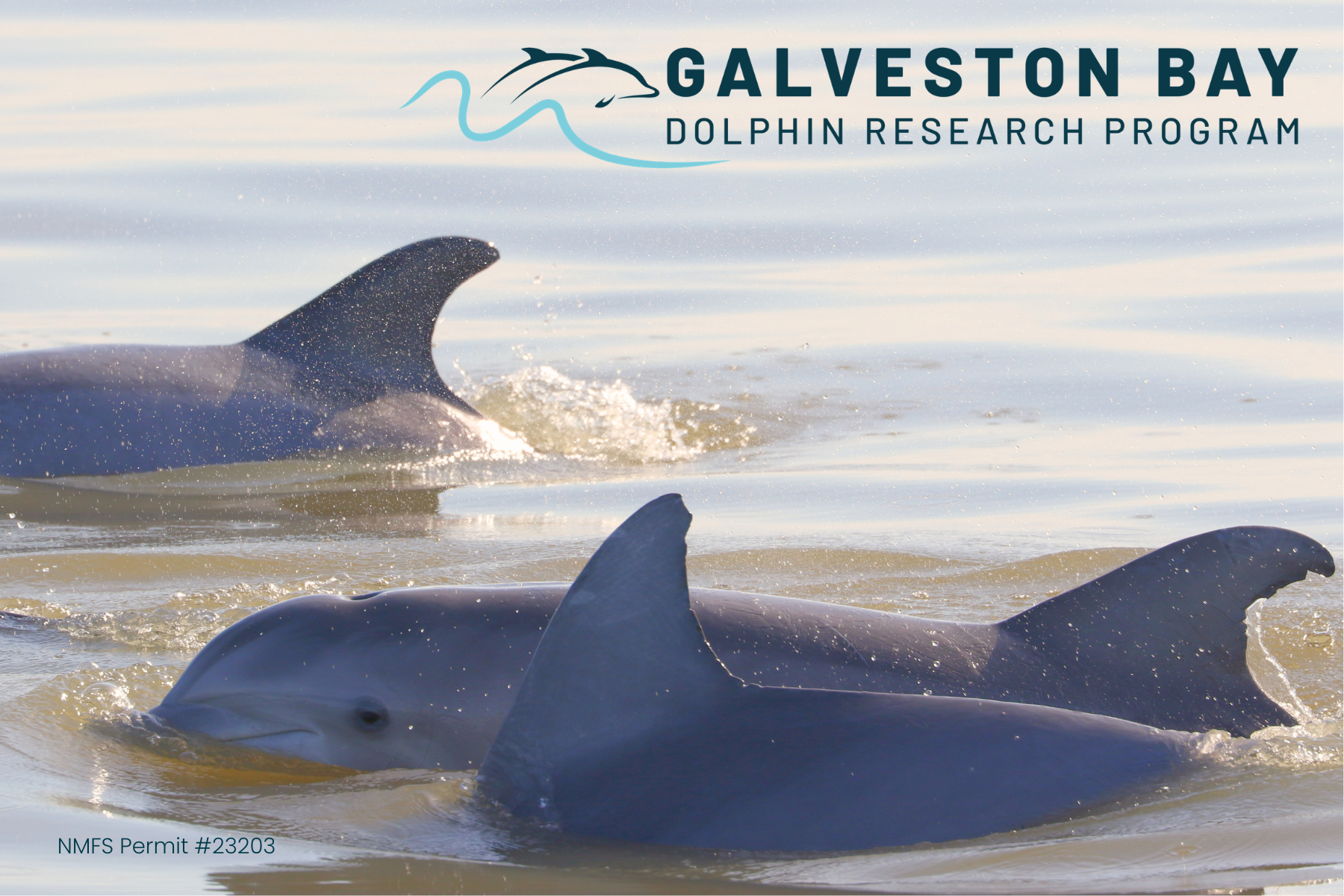
The Galveston Bay Dolphin Research Program (GDRP) aims to better understand the bottlenose dolphins (Tursiops truncatus) that live in the Galveston Bay estuary along the Gulf Coast of Texas.
Through boat-based surveys and long-term monitoring, researchers study the ecology, behavior, and health of this resident dolphin population.
The program also raises public awareness about Galveston Bay dolphins through community outreach, volunteer engagement, and education initiatives that help connect people to the wildlife of the Bay.
Learn more on galvestonbaydolphin.org ↗
What We Do
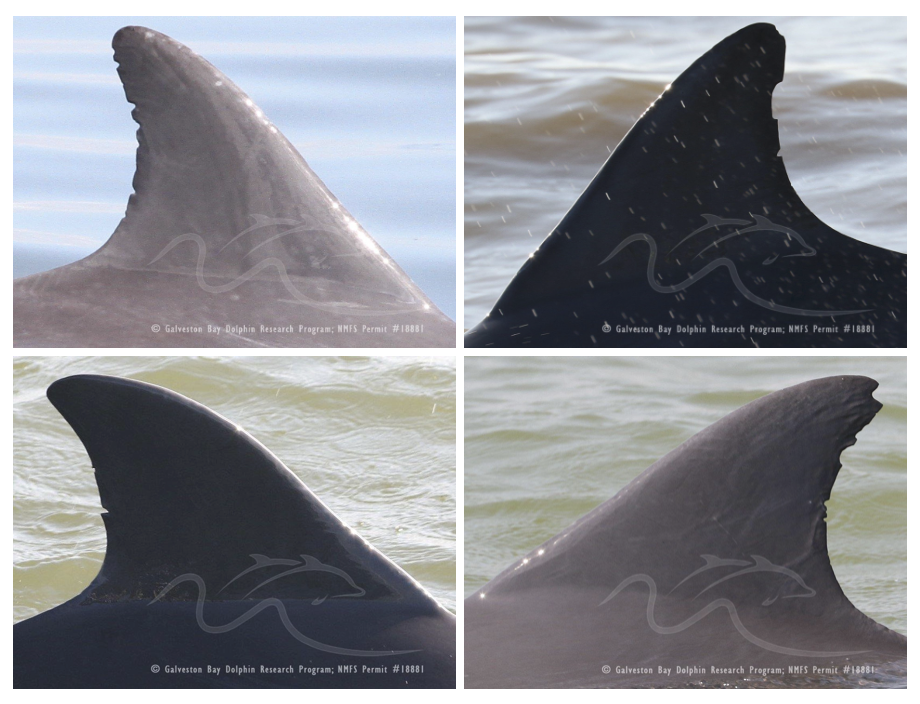
We conduct scientific research and monitoring of bottlenose dolphins in Galveston Bay, Texas. Using dorsal fin photo-identification methods during year-round boat-based surveys, we are able to learn about individual dolphins. Additionally, we conduct exploratory surveys, remote biopsy sampling, and acoustic monitoring to increase understanding of this population.
Read some of our publications on galvestonbaydolphin.org ↗
Community Science Volunteering
Year-round Field Monitoring
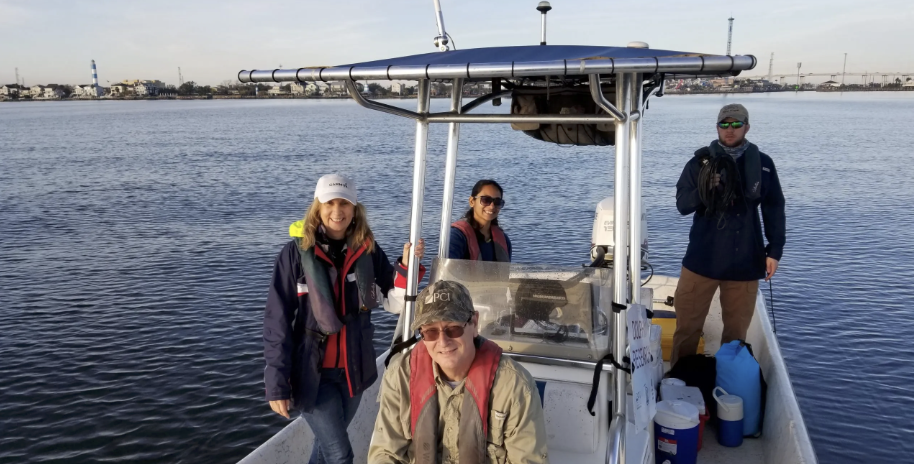
We conduct boat surveys with the help of trained and vetted volunteers to track individual dolphins, residency patterns, and seasonal movements throughout Galveston Bay.
Land-Based Citizen Science
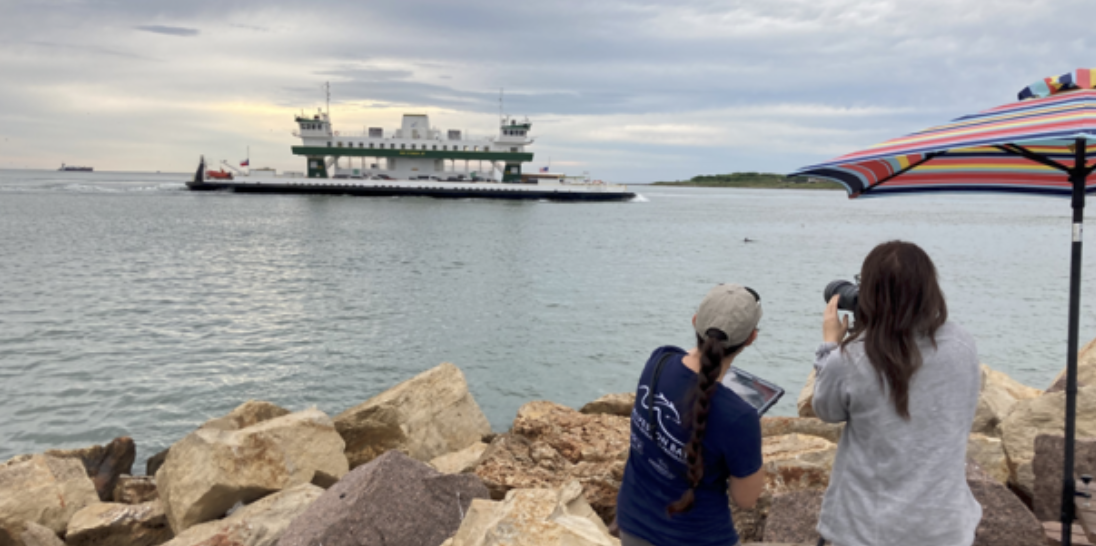
Through our Land-based Dolphin Research and Outreach Station, trained volunteers work in 3-4 person teams to conduct land-based dolphin observations while interacting with visitors at the park.
The station supports two primary objectives:
- document fisher-dolphin interactions and obtain photographs that can be used for post-analysis (e.g. for individual identification and to record scarring consistent with fishing debris entanglement), and
- use dolphins as a charismatic/flagship species to educate on the effects of marine debris and encourage the use of monofilament recycling tubes at the park.
The station is set up at Seawolf Park in Galveston, a location where dolphins are sighted often and where GBF’s Marine Debris team has identified high concentrations of fishing/monofilament debris.
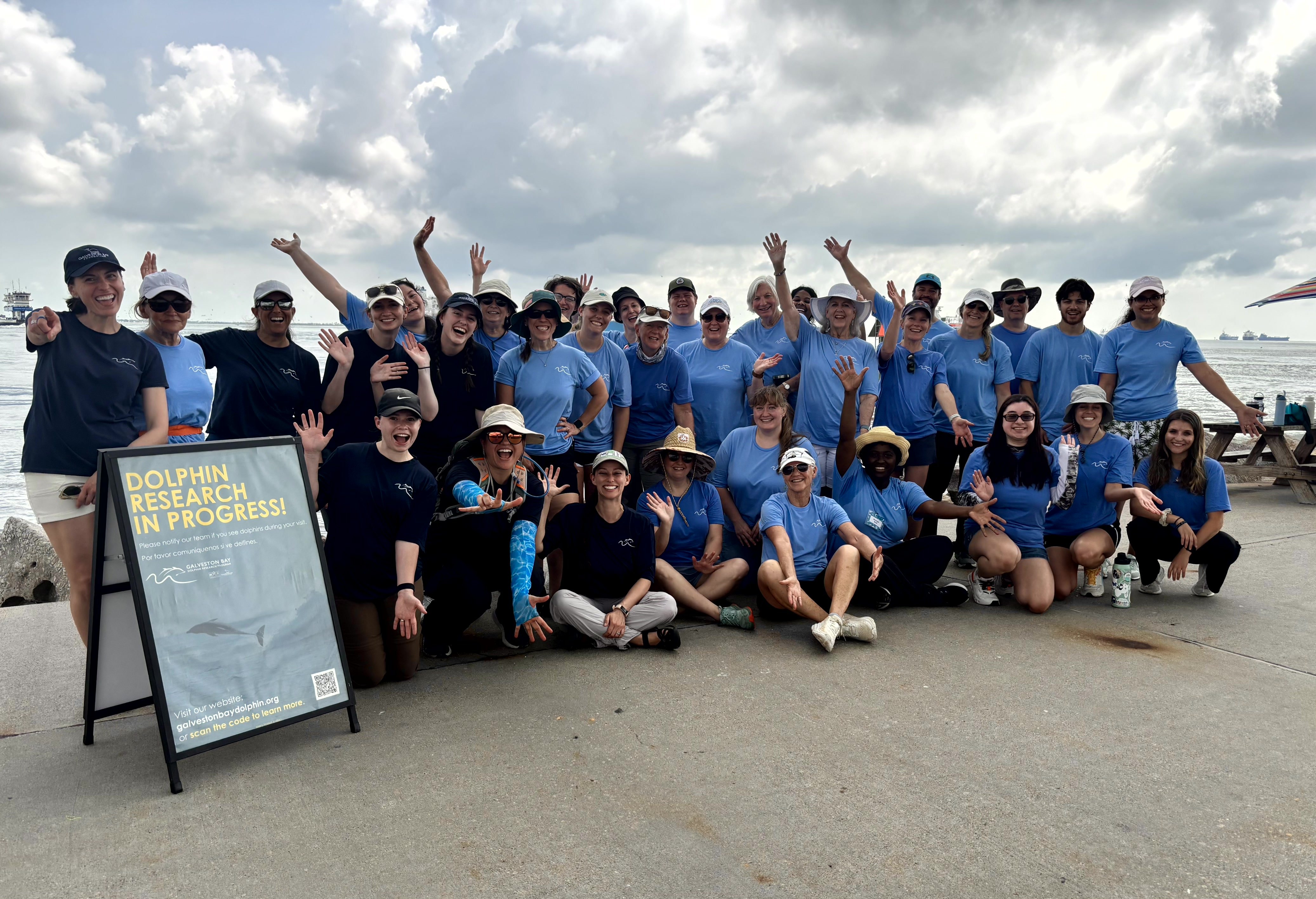
Interested in volunteering with the Dolphin Research and Outreach Station?
Applications now open!
Volunteer Requirements
Participants must:
- Be 18 years or older
- Be able to work outdoors for 3-4 hours
- Walk and stand on uneven ground
- Carry and set up equipment (~25 lbs)
- Work independently during shifts while collaborating with teammates
- Follow station protocols and instructions
- Provide two professional references
- Commit to at least one shift per month (shifts typically last 4hrs) for one year
Training and Commitment
This is an ongoing initiative, and long-term commitment is required.
Selected volunteers participate in a structured 2-day training workshop designed to support consistent data collection and effective public engagement. This year’s workshop will be held on Saturday, June 27th, AND Sunday, June 28th.
Training includes:
- Dolphin identification and observation methods
- Data collection protocols
- Photography techniques
- Vistitor engagement strategies
- Marine debris messaging and prompts
Because space at workshops is limited, this is competitive opportunity.
We ask volunteers applying for this role to provide detailed information about:
- their availability,
- relevant skills and experience,
- and a personal statement about their interest in marine conservation and outreach.
If you are invited to become a volunteer, you will need to contribute a one-time training workshop fee (student = $35; non-student = $45; includes t-shirt and lunch on Saturday, June 27th).
The Application deadline is May 15.
Questions?
Questions about the program or application process can be directed to Elisa O'Neal, Volunteer Manager, at eoneal@galvbay.org.
Details
| (281) 332-3381 | |
| volunteer@galvbay.org | |
| Alyssa Quackenbush | |
| Research Associate | |
| https://galvestonbaydolphin.org/ |